

Sea Buckthorn Juice vs Amla Juice: Benefits, Differences & Which to Choose
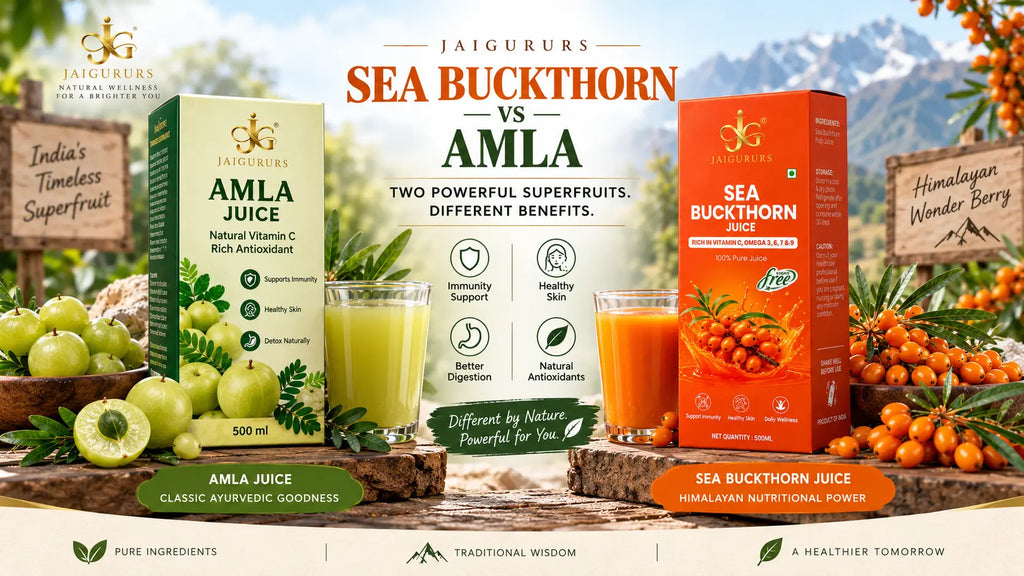
If you are comparing sea buckthorn juice vs amla juice, you are looking at two nutrient-rich Indian wellness drinks with some important differences. Both fruits are known for vitamin C and naturally tart flavors, but their nutritional profiles are not identical.
Amla (Phyllanthus emblica), or Indian gooseberry, has a long history of use in Indian food and Ayurveda. Sea buckthorn (Hippophae rhamnoides) is an orange berry associated with cold-climate and Himalayan regions and is notable for its combination of carotenoids, vitamin C and fatty acids.
So which one should you choose? There is no universal winner. The better option depends on what you want from the product, the formulation you buy, your budget and how it fits into your diet.
Quick answer: Choose amla juice if you primarily want an accessible traditional fruit juice with vitamin C and a long history of use in India. Consider sea buckthorn juice if you specifically want a fruit product known for carotenoids and fatty acids, including Omega-7. Compare the actual ingredient list, serving size and product label before buying.
Sea Buckthorn and Amla: What Is the Difference?
Amla is the fruit of Phyllanthus emblica, commonly called Indian gooseberry. It is widely cultivated in India and is used both as a food and in traditional Ayurvedic preparations.
Sea buckthorn is the fruit of Hippophae rhamnoides. It grows naturally across parts of Europe and Asia, including Himalayan regions. The fruit is distinctive for its orange color and naturally occurring oils and fatty acids.
The most useful distinction is therefore not simply “which has more vitamin C?” It is what else comes with the fruit. Amla is especially associated with vitamin C, tannins and polyphenols, while sea buckthorn fruit is notable for carotenoids and a broader fatty-acid profile.
Sea Buckthorn Juice vs Amla Juice: Quick Comparison
| Feature | Sea Buckthorn Juice | Amla Juice |
|---|---|---|
| Botanical name | Hippophae rhamnoides | Phyllanthus emblica |
| Fruit profile | Orange-yellow berry with naturally occurring fruit and seed oils | Green-yellow Indian gooseberry with astringent, sour flavor |
| Notable nutrients / compounds | Vitamin C, carotenoids, flavonoids and fatty acids including Omega-7 | Vitamin C, tannins, polyphenols and other plant compounds |
| Fatty acids | Notable fatty-acid content, depending on fruit part and processing | Generally much lower in fatty acids than sea buckthorn fruit products |
| Flavor | Strongly tart, sour and fruity | Sour, astringent and characteristic of amla |
| Typical product positioning | Premium botanical / functional fruit product | Widely available traditional Indian fruit juice |
| Best comparison point | Distinctive fatty acids + carotenoids + vitamin C | Vitamin C + traditional Indian use + accessibility |
Note: Exact nutrient levels vary with cultivar, growing conditions, harvest, processing and formulation. A juice cannot be compared accurately with another juice using fruit-level nutrient numbers alone.
Vitamin C: Sea Buckthorn vs Amla
Vitamin C is one of the most common reasons people compare these two fruits. Both can contribute vitamin C, but the amount in a finished juice depends on the fruit variety, harvest, processing and serving size.
Amla and Vitamin C
Amla is well known for its vitamin C content and its broader profile of tannins and polyphenols. It has also been used traditionally in a variety of Indian preparations.
Sea Buckthorn and Vitamin C
Sea buckthorn fruit can also contain substantial vitamin C along with carotenoids and other plant compounds. However, it is not scientifically useful to declare one fruit the universal “vitamin C winner” without specifying the exact fruit, processing method and serving.
Bottom line: If vitamin C is your only decision factor, compare the actual nutrition panel and serving size of the two products rather than relying on generic fruit-level claims.
What Makes Sea Buckthorn Different?
The standout difference in a sea buckthorn vs amla comparison is the fatty-acid profile of sea buckthorn fruit and its oils.
- Omega-7: Sea buckthorn is one of the better-known botanical sources of palmitoleic acid (Omega-7), although levels vary by fruit part and product.
- Carotenoids: The orange color of sea buckthorn fruit comes partly from naturally occurring carotenoids.
- Mixed nutrient profile: Sea buckthorn products can contain vitamin C, carotenoids, fatty acids and other plant compounds in the same fruit-derived ingredient.
For a deeper explanation of Omega-7 and sea buckthorn, read Omega-7: What It Is, Benefits, Sources & Why Sea Buckthorn Matters.
What Makes Amla Different?
- Long-standing Indian use: Amla has a strong culinary and traditional wellness history in India.
- Vitamin C and polyphenols: Amla contains vitamin C along with tannins and other plant compounds.
- Accessibility: Amla is widely cultivated and commonly available in India, making it easier to find in many forms and price ranges.
- Traditional hair and wellness associations: Amla is widely used in traditional Indian hair and wellness practices, although traditional use should not be presented as proof of treatment for a medical condition.
Which Is Better: Sea Buckthorn or Amla?
There is no universal winner. Use your goal as the deciding factor.
| If your priority is... | Consider... | Why? |
|---|---|---|
| A widely available traditional Indian fruit juice | Amla | Broad availability and long-standing culinary/traditional use |
| Vitamin C plus a broader fatty-acid profile | Sea Buckthorn | Sea buckthorn fruit is distinctive for its fatty acids, including Omega-7 |
| A premium Himalayan botanical product | Sea Buckthorn | Often sourced from Himalayan growing regions and sold as a specialty product |
| A more budget-friendly everyday option | Amla | Amla is generally more widely cultivated and available |
For skin-specific questions, see our dedicated guide: Sea Buckthorn for Skin: Benefits, Nutrients & What Research Says.
Can You Drink Sea Buckthorn and Amla Juice Together?
There is no need to combine them simply because both contain vitamin C. If you want to use both products, consider their individual serving instructions, total dietary intake and your own tolerance.
Because both juices can be quite tart, combining concentrated servings may make the drink harder to tolerate. If you use both, follow each product's label and avoid increasing the recommended amount.
If you take medicines or have a medical condition, ask a doctor or pharmacist before combining concentrated botanical products.
Price: Why Is Sea Buckthorn Usually More Expensive?
Sea buckthorn products are often positioned at a higher price than mainstream amla juices. Possible reasons include sourcing location, harvesting logistics, lower production scale, processing and packaging.
However, price alone does not prove quality. When comparing products, check the ingredient list, serving size, added sugar, processing information, storage instructions and quality/testing information.
5 Things to Check Before Buying Either Juice
- Ingredient list: Check exactly what is in the bottle and whether the fruit juice/pulp is the main ingredient.
- Added sugar: If you want an unsweetened product, verify the ingredient list and nutrition panel rather than relying on front-label wording.
- Serving size: Compare products using their actual recommended serving rather than comparing bottle size alone.
- Processing and storage: Look for clear manufacturer information about processing, opening and storage.
- Quality information: Prefer brands that provide clear manufacturing, testing or quality information where applicable.
For a detailed sea buckthorn buying checklist, read How to Choose Pure Sea Buckthorn Juice: 5 Things to Check on the Label Before You Buy.
Where JaiGururs Sea Buckthorn Juice Fits
If you decide that the distinctive nutritional profile of sea buckthorn fits your routine, JaiGururs Sea Buckthorn Juice is positioned as a concentrated sea buckthorn pulp product.
- Sea buckthorn-focused formulation: Designed around the fruit rather than a generic mixed-fruit beverage.
- Product-specific serving guidance: The current guidance covered in our usage articles is 5 ml diluted in 100 ml of water, twice daily.
- Current label matters: Always check the latest product page and bottle label for ingredients, serving, storage and other specifications.
Explore JaiGururs Sea Buckthorn Juice
Frequently Asked Questions
Is sea buckthorn juice better than amla juice?
Neither is universally better. Amla is widely available and has a long history of use in India, while sea buckthorn is distinctive for its carotenoids and fatty acids, including Omega-7. Choose based on the nutrient profile, product quality, serving and your goals.
Which has more vitamin C: sea buckthorn or amla?
Both can be rich sources of vitamin C, but the amount varies substantially with fruit, cultivar, harvest and processing. For a real product-to-product comparison, check the nutrition information and serving size.
Can I drink sea buckthorn juice and amla juice together?
They can be used in the same overall diet, but there is no need to combine them or increase servings simply because they are both nutrient-rich. Follow both product labels and consider taste and digestive tolerance.
Which is better for skin: sea buckthorn or amla?
There is no simple universal answer. Sea buckthorn is notable for fatty acids and carotenoids, while amla provides vitamin C and other plant compounds. If skin is your specific search intent, see our dedicated sea buckthorn skin guide rather than choosing solely on marketing claims.
Why is sea buckthorn juice more expensive than amla juice?
Sea buckthorn is often sold as a specialty product, and sourcing, harvesting, processing and scale can affect its price. Amla is more widely cultivated and available in India. Compare the actual formulation and serving rather than price alone.
What does sea buckthorn juice taste like compared with amla?
Both are naturally tart and astringent, but the flavor is different. Sea buckthorn is strongly sour and fruity, while amla has the characteristic sour, bitter and astringent profile associated with Indian gooseberry.
Final Takeaway
Sea buckthorn vs amla juice is not a simple “winner takes all” comparison. Amla is an accessible traditional Indian fruit with vitamin C and a broad history of culinary and wellness use. Sea buckthorn stands out for its combination of vitamin C, carotenoids and fatty acids, including Omega-7.
Whichever you choose, focus on the actual product: ingredients, serving size, added sugar, processing, storage and quality information. That gives you a much more useful comparison than marketing claims alone.


