

Sea Buckthorn for Skin: Benefits, Nutrients & What Research Says
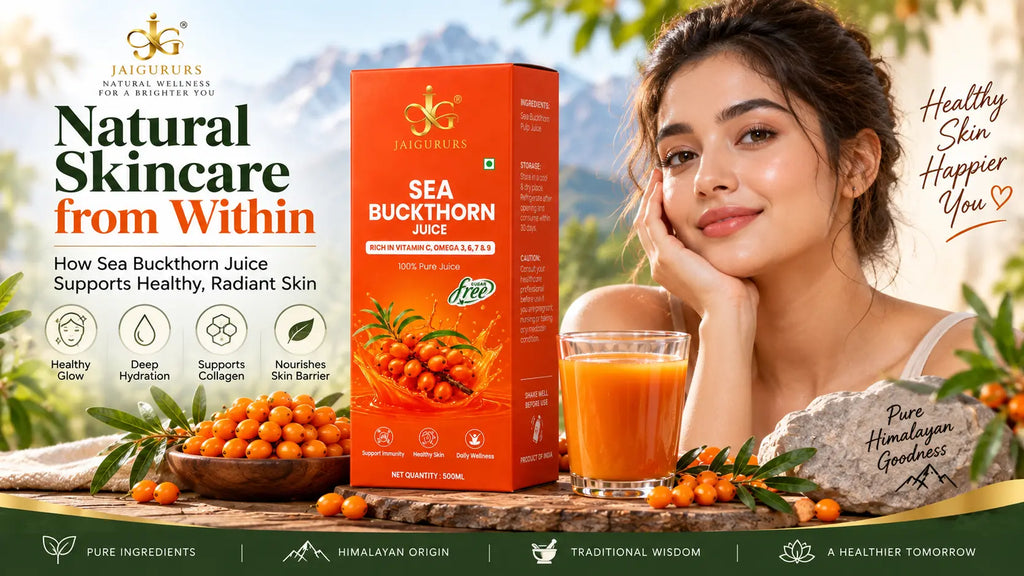
If you are interested in sea buckthorn for skin, you will often find very strong claims online—from “glass skin” and wrinkle reduction to acne cures. The reality is more useful: sea buckthorn is a nutrient-rich fruit, but no single food or juice can replace sunscreen, a balanced diet, sleep or appropriate skincare.
Sea buckthorn (Hippophae rhamnoides) is notable for its combination of vitamin C, carotenoids, tocopherols and fatty acids. Its fruit and oils have therefore attracted scientific interest in relation to skin, mucosal and antioxidant biology.
So, is sea buckthorn good for skin? It may be a useful part of a nutrient-dense diet, and research on sea buckthorn oil and palmitoleic acid provides some interesting findings. However, the evidence depends on the specific sea buckthorn preparation, dose and outcome. This guide explains what the fruit contains, what research actually supports, and how to approach sea buckthorn juice as part of a skin-focused routine.
Quick answer: Sea buckthorn contains nutrients relevant to normal skin function, including vitamin C, carotenoids and fatty acids. Research has explored sea buckthorn oil and palmitoleic acid for skin hydration and barrier-related outcomes, but evidence for ordinary sea buckthorn juice is more limited. It should be viewed as nutritional support—not a treatment for acne, eczema, wrinkles or other skin conditions.
Why Is Sea Buckthorn Interesting for Skin?
Healthy skin depends on many factors, including adequate nutrition, hydration, barrier lipids, collagen production, protection from ultraviolet radiation and overall lifestyle. Sea buckthorn is interesting because its fruit contains several nutrient groups rather than one isolated compound.
- Vitamin C: Vitamin C is an essential nutrient involved in normal collagen formation and also functions as an antioxidant.
- Carotenoids: Sea buckthorn's orange color comes partly from carotenoids such as beta-carotene and other pigments with antioxidant activity.
- Fatty acids: Sea buckthorn fruit and oils contain a mixture of fatty acids, including palmitoleic acid (Omega-7), although the composition varies by plant part and processing.
- Vitamin E and other plant compounds: Sea buckthorn oils can contain tocopherols, phytosterols and other compounds that contribute to the fruit's overall nutritional profile.
The important point is that nutritional composition is not the same thing as a proven clinical skin benefit. A nutrient can support normal physiology without meaning that drinking more of it will automatically improve a skin condition.
Sea Buckthorn for Skin: Key Nutrients
1. Vitamin C and Normal Collagen Formation
Vitamin C has a well-established role in normal collagen synthesis. It also contributes to protection of cells from oxidative stress. Because sea buckthorn fruit can be rich in vitamin C, it can contribute to dietary vitamin C intake depending on the product and serving.
That does not mean sea buckthorn juice can “build new collagen” on its own or erase wrinkles. It means that adequate vitamin C is one part of the nutritional foundation required for normal connective-tissue function.
2. Carotenoids and Antioxidant Nutrition
Sea buckthorn berries contain carotenoids and other antioxidant compounds. Carotenoids are widely studied for their relationship with skin photoprotection and oxidative stress, but dietary antioxidants do not provide the same protection as sunscreen.
Think of dietary antioxidants as part of overall nutrition, not as an SPF replacement. Daily broad-spectrum sunscreen and sensible sun protection remain important for reducing UV-related skin damage.
3. Omega-7 and Palmitoleic Acid
Palmitoleic acid is a monounsaturated fatty acid commonly discussed as Omega-7. Sea buckthorn is notable because its fruit and oils contain palmitoleic acid, although the amount varies between the pulp, seed oil, cultivar and processing method.
Research on palmitoleic acid and sea buckthorn oil has explored skin barrier and hydration-related outcomes. A 12-week randomized controlled study of oral palmitoleic acid supplementation reported improvements in some measures of skin barrier function, but it used a purified palmitoleic-acid supplement rather than sea buckthorn juice. Clinical study
4. Vitamin E and Other Lipid Compounds
Sea buckthorn oils contain vitamin E compounds and other lipids. These contribute to the overall composition of the oil, but the presence of a nutrient should not be interpreted as proof that a particular juice serving will produce a measurable cosmetic effect.
What Does Research Say About Sea Buckthorn and Skin?
This is where it is important to distinguish between sea buckthorn juice, sea buckthorn oil and isolated compounds. They are not interchangeable.
Human research on sea buckthorn oil
Human studies have investigated oral sea buckthorn oil in relation to skin and mucosal outcomes. Some findings suggest possible benefits for hydration or barrier-related measures, but study size, preparation and outcome measures vary. A review of sea buckthorn research also notes that the biological effects can depend on the plant part and the oil composition. Sea buckthorn research review
Research on palmitoleic acid
Palmitoleic acid is also being studied independently. The results are interesting, but a study of purified palmitoleic acid does not establish that an ordinary serving of sea buckthorn juice will produce the same outcome.
What about acne, eczema and wrinkles?
Current evidence does not justify presenting sea buckthorn juice as a treatment or cure for acne, eczema, psoriasis, rosacea or wrinkles. If you have a persistent or severe skin condition, a dermatologist is a better source of diagnosis and treatment.
Sea Buckthorn Juice vs Sea Buckthorn Oil for Skin
| Feature | Sea Buckthorn Juice | Sea Buckthorn Oil |
|---|---|---|
| Form | Fruit/pulp-based beverage | Concentrated oil from specific plant parts |
| Typical nutrient emphasis | Fruit compounds including vitamin C, carotenoids and fatty acids, depending on processing | Concentrated fatty acids, tocopherols and other lipid-soluble compounds |
| Evidence for skin | More limited product-specific clinical evidence | More human research exists for some skin and mucosal outcomes |
| How to use | Follow the product's serving and dilution instructions | Use according to the specific oral or topical product directions |
This distinction prevents a common SEO and health-content mistake: using research on sea buckthorn oil to make stronger claims about every sea buckthorn juice.
How to Use Sea Buckthorn Juice as Part of a Skin-Focused Routine
- Follow the product serving: Concentrated juices are not interchangeable. Use the serving stated on your bottle.
- Dilute when instructed: For JaiGururs Sea Buckthorn Juice, the serving guidance used in our dosage guide is 5 ml mixed with 100 ml of water.
- Be consistent rather than excessive: There is no evidence that taking a much larger serving produces better skin results.
- Keep the rest of your routine: Adequate protein, fruit and vegetables, hydration, sleep and sun protection all matter to skin health.
- Give nutrition time: Do not judge a dietary change after a few days. Individual results vary, and there is no established timeline at which everyone will see a cosmetic change.
For exact dilution, timing and daily-use guidance, read: Sea Buckthorn Juice Dosage: 3-Month Routine, Timing & How to Take It.
What to Look for When Buying Sea Buckthorn Juice for Skin Nutrition
If you are choosing a sea buckthorn juice for its nutritional profile, check the product rather than relying on generic “glowing skin” claims.
- Ingredient list: Check whether the product is pure sea buckthorn juice/pulp or a blend.
- Added sugar: If you want an unsweetened product, confirm the ingredient list and nutrition panel.
- Processing information: Look for clear information about how the product is made and stored.
- Product-specific nutrition: If Omega-7 or vitamin C content matters to you, look for quantified information rather than a generic claim.
- Serving guidance: Make sure the recommended serving is clearly stated.
For a more detailed label checklist, read: How to Choose Pure Sea Buckthorn Juice: 5 Things to Check on the Label Before You Buy.
Can You Apply Sea Buckthorn Juice Directly to Your Face?
Food-grade sea buckthorn juice is not the same as a formulated skincare product. Pure juice can be acidic and may irritate sensitive skin, so it should not be treated as a DIY facial serum.
If you want to use sea buckthorn topically, choose a cosmetic product specifically formulated and tested for skin application rather than applying drinking juice directly to your face.
Where JaiGururs Sea Buckthorn Juice Fits
JaiGururs Sea Buckthorn Juice is positioned as a sea buckthorn pulp juice for daily dietary use. If you are interested in its skin-nutrition angle, the most useful approach is to evaluate the actual product composition, serving guidance and ingredient information rather than expecting a medicine-like result.
Explore JaiGururs Sea Buckthorn Juice and review the current product information before use.
You can also read our Omega-7 guide to understand why sea buckthorn is associated with this less-common fatty acid: Omega-7: What It Is, Benefits, Sources & Why Sea Buckthorn Matters.
Frequently Asked Questions
Is sea buckthorn good for skin?
Sea buckthorn provides nutrients associated with normal skin function, including vitamin C, carotenoids and fatty acids. Research on sea buckthorn oil and palmitoleic acid is promising in some areas, but evidence for ordinary sea buckthorn juice is more limited.
What are the benefits of sea buckthorn for skin?
Its nutritional profile includes vitamin C, carotenoids, fatty acids and other plant compounds. These nutrients are relevant to normal collagen formation, antioxidant nutrition and skin barrier biology, but sea buckthorn should not be presented as a cure for skin disease.
Does sea buckthorn juice help with glowing skin?
A nutrient-rich diet can support normal skin health, and sea buckthorn contains several relevant nutrients. However, there is no reliable evidence that a particular sea buckthorn juice will create an immediate “glow” or guarantee a cosmetic result.
How long does sea buckthorn take to work for skin?
There is no scientifically established timeline at which everyone will see skin changes from drinking sea buckthorn juice. Human studies of specific sea buckthorn oils or palmitoleic-acid products have used periods such as several weeks to months, but those results cannot be directly applied to every juice.
Can sea buckthorn juice cure acne or eczema?
No. There is not sufficient evidence to describe sea buckthorn juice as a treatment or cure for acne, eczema, psoriasis, rosacea or other chronic skin conditions. Persistent or severe symptoms should be evaluated by a dermatologist.
Can I apply sea buckthorn juice directly to my face?
It is better not to use drinking juice as a DIY facial treatment. Food-grade juice may be acidic and is not formulated or tested in the same way as a cosmetic product. For topical use, choose a product specifically designed for skin.
Does sea buckthorn contain Omega-7?
Yes. Sea buckthorn fruit and oils can contain palmitoleic acid, commonly discussed as Omega-7. The actual amount varies according to the plant part, cultivar and processing method.
Final Takeaway
Sea buckthorn for skin is best understood as a nutrition topic, not a miracle skincare treatment. The fruit provides vitamin C, carotenoids, fatty acids and other plant compounds that make it an interesting addition to a balanced diet.
Research on sea buckthorn oil and palmitoleic acid provides encouraging areas for further study, but the evidence is not strong enough to promise that drinking sea buckthorn juice will erase wrinkles, cure acne or replace conventional skincare and sun protection.
If you want to include sea buckthorn in your daily wellness routine, follow the product's serving instructions and choose a product with clear ingredient and nutrition information. Explore JaiGururs Sea Buckthorn Juice for the current product details.


